
AI Evolution: How BoundBot Is Rewriting Customer Support Automation
by Chelsea Hagon, Senior Software Engineer
Introduction
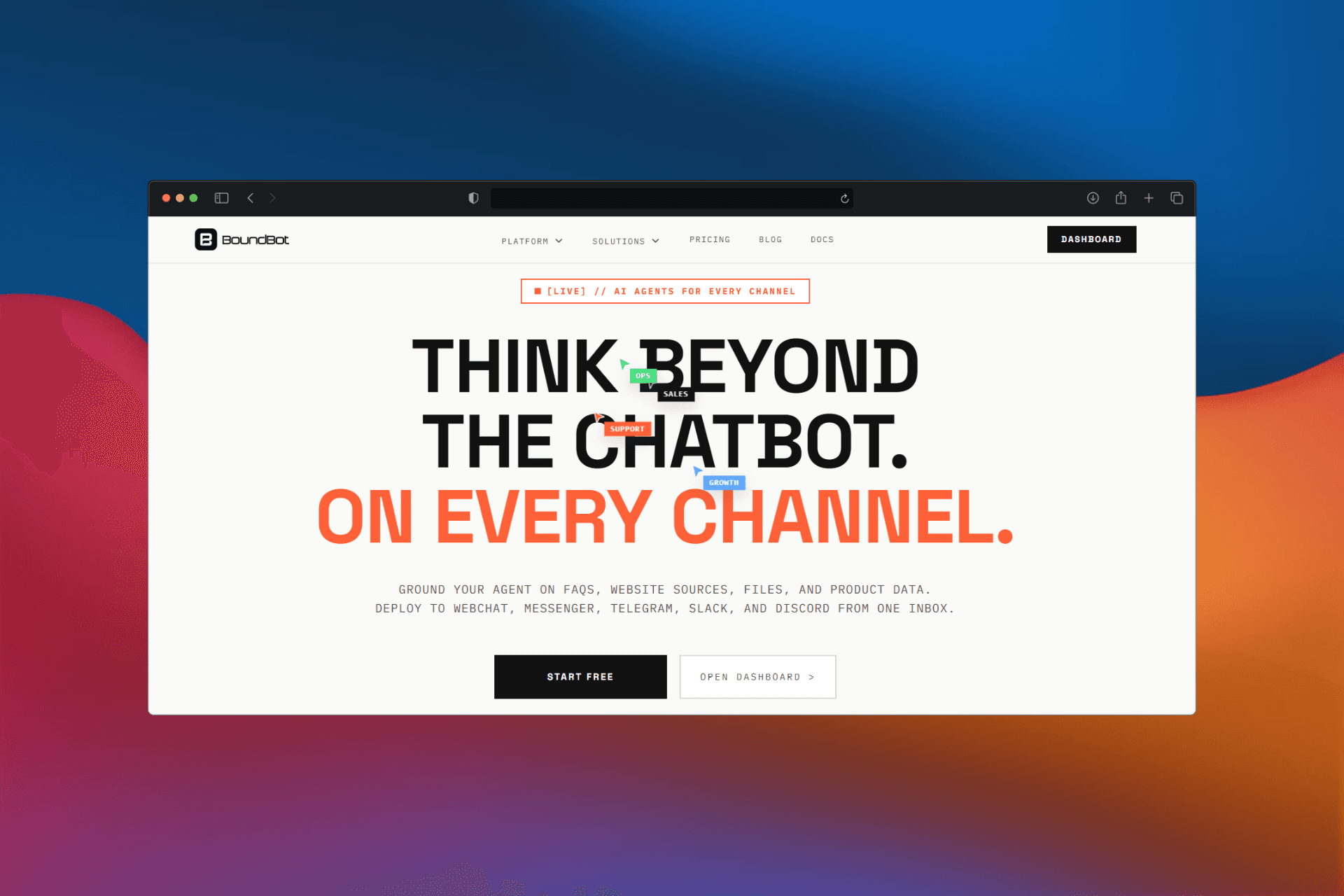
Support automation used to mean rigid decision trees, brittle keyword matching, and customer frustration hiding behind a chat widget. In 2026, the expectation is fundamentally different: users want immediate, accurate help that still feels human when stakes are high. BoundBot was designed precisely for this shift. Instead of replacing support teams, it expands their reach through a layered architecture: intent detection, context retrieval, policy-aware action routing, and clean escalation into human queues when confidence drops.
What makes this evolution meaningful is not just model quality, but operational design. BoundBot integrates with product telemetry, billing, and CRM records to understand who the user is, what they attempted, and what outcome matters. That context reduces repetitive questioning and cuts resolution time. More importantly, it gives support leaders a system they can govern: response templates, compliance controls, role-based intervention, and continuous feedback loops from transcripts.
At SaaS-framer, we see BoundBot as a practical blueprint for modern support operations: AI handles predictable volume, humans handle nuanced exceptions, and both are measured on the same customer outcomes. The result is a support function that scales without losing trust.
- Key takeaway 1: Automation must be context-aware, not just prompt-aware.
- Key takeaway 2: Human handoff quality is as important as bot response quality.
- Key takeaway 3: Measurable workflows beat vanity AI demos every time.